Tuesday, February 20, 2018

Cinemagraph Examples and Instructions


40 CINEMAGRAPHS


http://photodoto.com/how-to-make-a-cinemagraph/

Artist of the Week Jaime Beck and Kevin Burg

Artist of the Week Jaime Beck and Kevin Burg
http://time.com/3388024/when-photos-come-to-life-the-art-of-the-cinemagraph/
http://cinemagraphs.com/


Paris, September 2015

World's Highest resolution Camera


Cinemagraph


Purple Rain Cinemagraph PRINCE


Awards Cinemagraph


Winner 
Best Decades Project- Steve Allport


Winner 
Best Production ( Technical Skill)
                                                                     Eric Sherrod


Winner
Best Concept - Simarjot, Parmik, Matt


Winner 
Best Overall Cinemagraph - Tristen Singer


1 Trillion Frames Per Second Camera


Bullet through Apple ~ 1964 by Harold E. Edgerton MIT. The now iconic image was taken with flash duration of about a millionth of a second using a specially built strobe. The .30 bullet was traveling at 2,800 feet per second.
 
Ramesh Raskar presents femto-photography, a new type of imaging so fast it visualizes the world one trillion frames per second, so detailed it shows light itself in motion. This technology may someday be used to build cameras that can look "around" corners or see inside the body without X-rays.


Photographing Water


Learn how to freeze time and capture water drop photos that are packed full of life.

A colourful water splash
Design Your Drop

http://www.photographymad.com/pages/view/photographing-water-dropsWater drop with colourful background

Tuesday, February 13, 2018

Science Photography

Stunning photo of a single atom wins prestigious science photography contest

https://www.techly.com.au/2018/02/13/stunning-photo-single-atom-wins-prestigious-science-photography-contest/ 

 Featured Image for Stunning photo of a single atom wins prestigious science photography contestThe photo, titled “Single Atom In An Ion Tap”, was taken by David Nadlinger at Oxford University’s Clarendon Laboratory.

Action Sequence 6 frame

image1.jpg


Setting Up Your Camera for Continuous Shooting and Autofocus

One of the biggest challenges you will face when capturing fast-moving subjects is getting that one perfect frame when the subject is in focus and positioned exactly where you want them. With a few changes to the camera settings on your 6D, you can overcome these challenges. Let’s now talk about drive modes and AF (autofocus) modes.

Drive Modes

The drive mode dictates how fast each photo is taken and how many photos are captured with each press of the shutter release button. The drive modes available on your camera are the following:
  • Single shooting: With this setting, you will take only one photograph.
  • Continuous shooting: When you press and hold the shutter button, photographs will be taken at a speed of 4.5 shots per second.
  • Silent single shooting: With this setting, the sound made when you press the shutter release button will be minimal.
  • Silent continuous shooting: If you want to shoot a series of images rapidly but also keep the noise of your shutter down, use this setting.
  • 10-sec. self-timer/Remote control: Self-timer mode. The camera delays 10 seconds from the time you press the shutter release button to the time that a photograph is taken.
  • 2-sec. self-timer/Remote control: Self-timer mode. The camera delays 2 seconds from the time you press the shutter release button to the time that a photograph is taken.
The best option for action and sports photography is the Continuous shooting mode. It allows you to capture up to 4.5 images per second continuously, ensuring a higher likelihood of getting that one great shot. But keep in mind that if you use this drive mode often, you will fill up your memory cards much faster than if you were just taking a single photo at a time.
The size of the memory buffer on your camera, the image format (JPEG or RAW), and the speed of your memory card limit how many seconds you can use the Continuous shooting mode. The digital image files on your 6D are constantly being written to the memory card as you take photos. But when you take multiple images in a row, the camera stores these digital images inside the memory buffer on the camera itself until it can write the images to your memory card. The speed at which this data is processed and written to your card depends on the speed.


Assignment: Bringing Action to life:Multi-Burst Shot into a sequence in Photoshop (can be taken on the DSLR or your Phone). Continue to shoot action as needed. ​
Shoot action with a tripod, or use the previous shoot from shooting action. Use 6 images minimum.Related imageImage result for action sequencephotoImage result for action sequencephoto

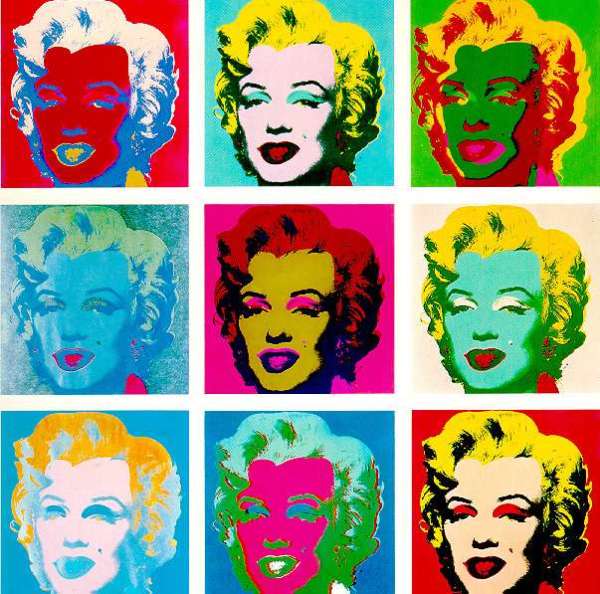
Artist of the Week Andy Warhol


                                                         http://www.warhol.org/


Artist Andy Warhol

1963                                  $105 million.

Silver Car Crash (Double Disaster)


1. How is the technical quality? 
2. How’s the composition? 
3. Did the photographer connect with his subjects or do they look tense, posed ?
4. Does the photographer tell a story
5. What do you find interesting about his work? 


Sunday, February 4, 2018

Triptych

Triptych
1.
Fine Arts. a set of three panels or compartments side by side, bearing pictures, carvings, or the like.
2.
a hinged, three-leaved tablet, written on, in ancient times, with a stylus.

Long Shot (LS) Medium Shots (MS) and Closeup Shots (CU)

COMPOSITION

Video images, like still photographs, are subject to the aesthetic rules of picture composition. There are, however, factors peculiar to video that more or less influence television composition. These factors are as follows:
  • The small monitor requires objects to be shown relatively large so they can be seen clearly on a small screen. You must shoot more extreme close-ups (ECU), close-ups (CU), medium shots (MS), few long shots (LS), and very few extreme long shots (ELS).
  • The 3:4 aspect ratio of the picture cannot be changed so all picture elements must be composed to fit it. The aspect ratio is the ratio of picture height to width. There is no vertical format in television. You must always think horizontal format.
  • The video camera is the eyes of the viewer. Therefore, camera movement, as well as the static arrangement of elements within the frame, must be considered.
  • When shooting uncontrolled action, you may not be able to predetermine composition. Sometimes all you can do is correct certain compositional errors.
In motion media, the picture on the screen is referred to as a shot. A shot is one continuous camera run from the time the recording starts to the time the recording stops. A shot may last a few seconds, several minutes, or the entire program. A motion-video camera person must always think in terms of shots.
Most rules of composition in still photography apply equally well to composition in motion media.


BASIC SEQUENCE

During motion-media recording, you can change the image size by changing the camera-to-subject distance or by using a zoom lens (which also changes the field of view).
When recording an event on motion media, there are three basic shots or sequences you must use: long shots (LS), medium shots (MS), and closeup shots (CU) (fig. 13-10). The type of shot being used can limit or increase the amount of visual information presented to the viewer. Long shots generally establish a location. A medium shot is used primarily as a transition between a long shot and closeup shot. Closeup shots create impact and provide more detail and less visual information pertaining to the subject's surroundings.
fig1310.gif (75656 bytes)


Light Painting/ Long Exposure

light-painting-5-tools-01
http://www.diyphotography.net/top-5-light-painting-tools-can-make/